
Chattanooga People Directory Coverage
Chattanooga people directories are split among city, county, state, school, university, property, and archive keepers. No single list covers every resident. A current public contact belongs in an agency or campus directory, a parcel owner belongs in the assessment roll, and a past resident may appear only in a city directory, obituary citation, newspaper, or yearbook. Choose the directory by the relationship the person had to Chattanooga.
| Directory Source | People or Parties Listed | Keeper | How to Reach It |
|---|---|---|---|
| Government rosters | Officials, departments, board members | Chattanooga and Hamilton County | Free web browse |
| Education directories | School and UTC departments; some named staff | Hamilton County Schools and UTC | Free web search or browse |
| Property-owner roll | Assessed owners and recorded deed parties | Assessor and Register of Deeds | Free assessor search; register counter or account |
| License and business lists | Credential holders, entities, registered agents | Tennessee state agencies | Free index searches |
| Local-history directories | Past residents, students, clubs, and deceased people | CPL and UTC | Digital, reading room, email, or microfilm |
Start with the narrowest official list. Department rosters answer who serves the public now. Property rolls tie a name to an assessed parcel, not to every person living there. Historical directories are best for family research, old neighbors, classmates, and former occupants. When a public-record index raises access questions, Chattanooga's public records overview explains the custodian and request side without turning the directory into something it is not.
Chattanooga Government Contact Directories
The Chattanooga government directory is arranged around Administration and City Departments. Its board and commission pages add appointed member rosters, each body's role, governing rules, and meeting context. An external employee PDF supplies names, titles, divisions, and office telephone details, but it bears an internal date of November 13, 2023. Check a current department page before relying on a name.
The official Chattanooga directory capture shows the live government hub:
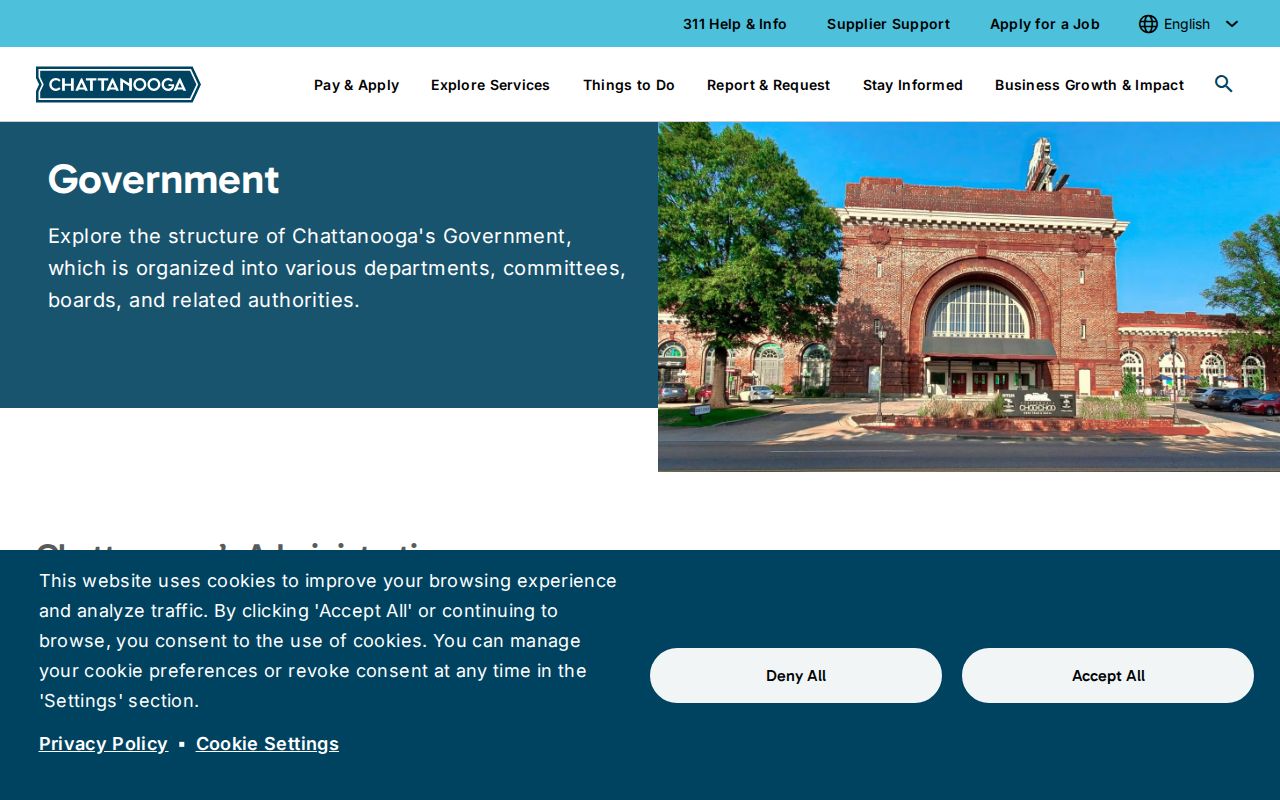
Its department-first layout works best when the office is known, while the dated PDF is a secondary name list. The Hamilton County directory begins with elected officials and judges, then offers an A through W department index. Entries may show a department or official name, street address, phone, fax, email action, and office link. Most offices state hours of 8 a.m. to 4 p.m. except holidays. This is a browse tool, not a verified free-text employee search.
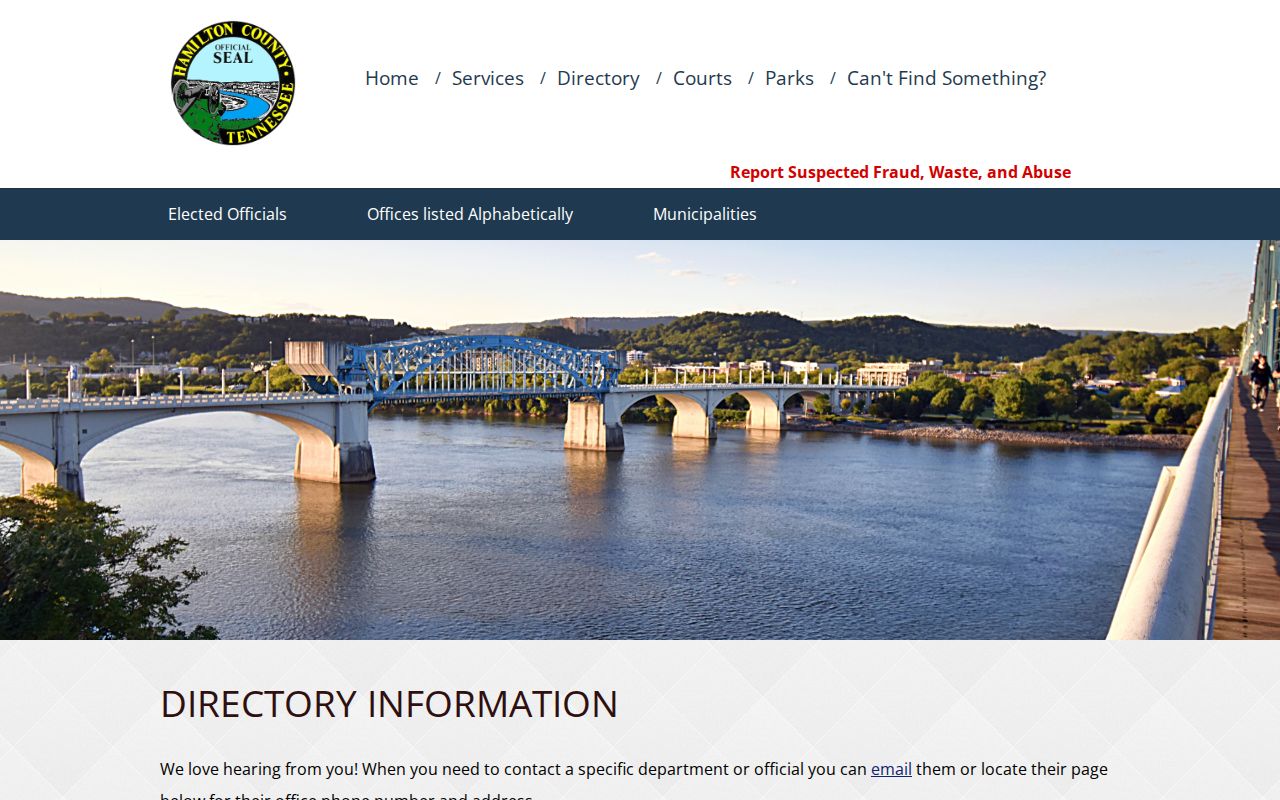
The alphabetical county structure can route a search to the right records office even when it does not expose an individual staff name.
Tennessee Directories Serving Chattanooga
State government adds a separate layer. The Tennessee State Directory is a department and telephone-directory gateway, useful when the Chattanooga connection leads to a statewide program. Named staff detail varies by agency, so begin with the department and follow its official contact route. Research did not verify a single, independent state employee name search with stable public fields.
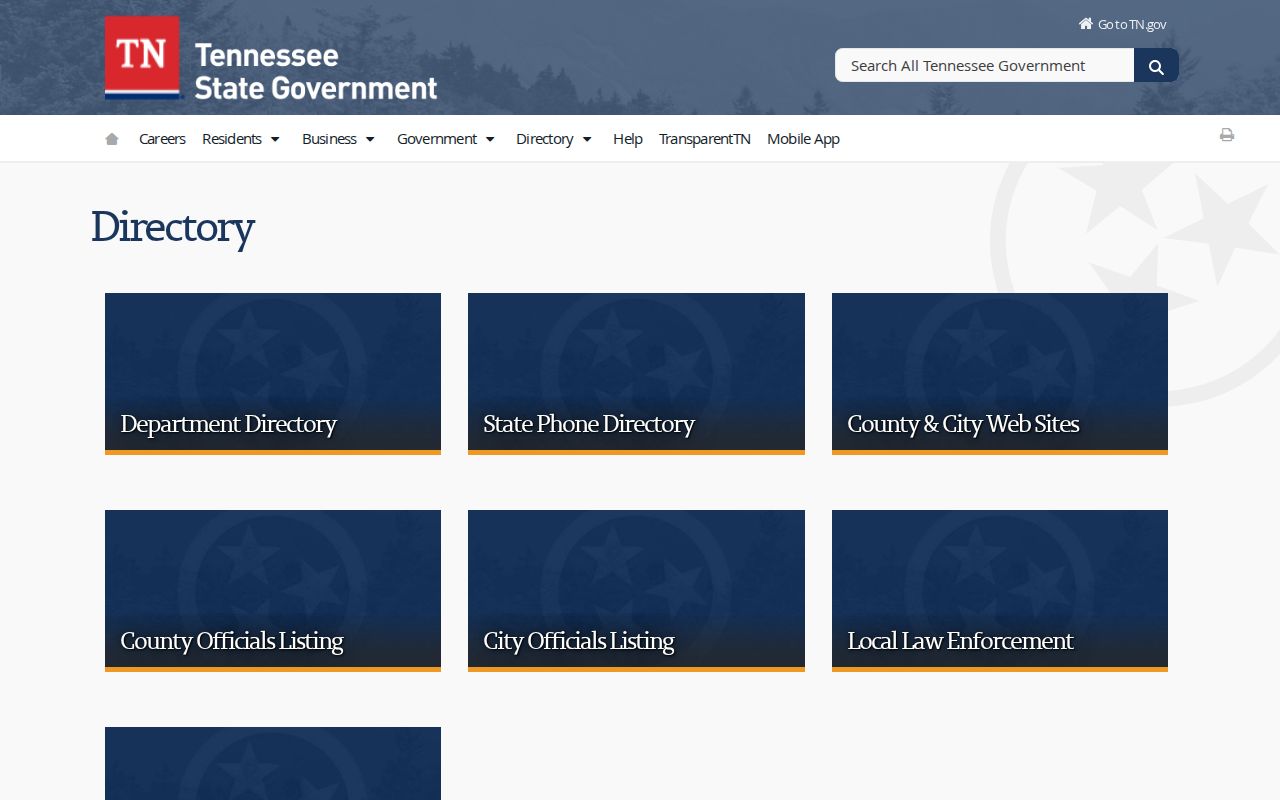
The captured hub confirms department browsing as the dependable public route, rather than a promise that every state worker has a searchable personal entry.
For elected officials, Hamilton County Election Commission maintains a more focused roster. Its filter accepts a name, office, or party. Results identify the office, elected official, party or district, term, next election, and contact. The coverage reaches federal and state representatives, county officials and judges, and Chattanooga municipal offices. It lists current officeholders, not every public worker or past candidate.
Note: A department main line is the safest fallback when a named contact is absent or a saved directory entry has aged.
Chattanooga School and UTC Directories
The Hamilton County Schools department directory covers district functions and links onward to its staff directory and school finder. The district reports 79 schools, nearly 2,800 full-time teachers, and more than 44,500 students. Those figures explain why a school or department is a far better starting point than a common name. The exact person-search fields were not exposed during research, so no unsupported field list belongs here.
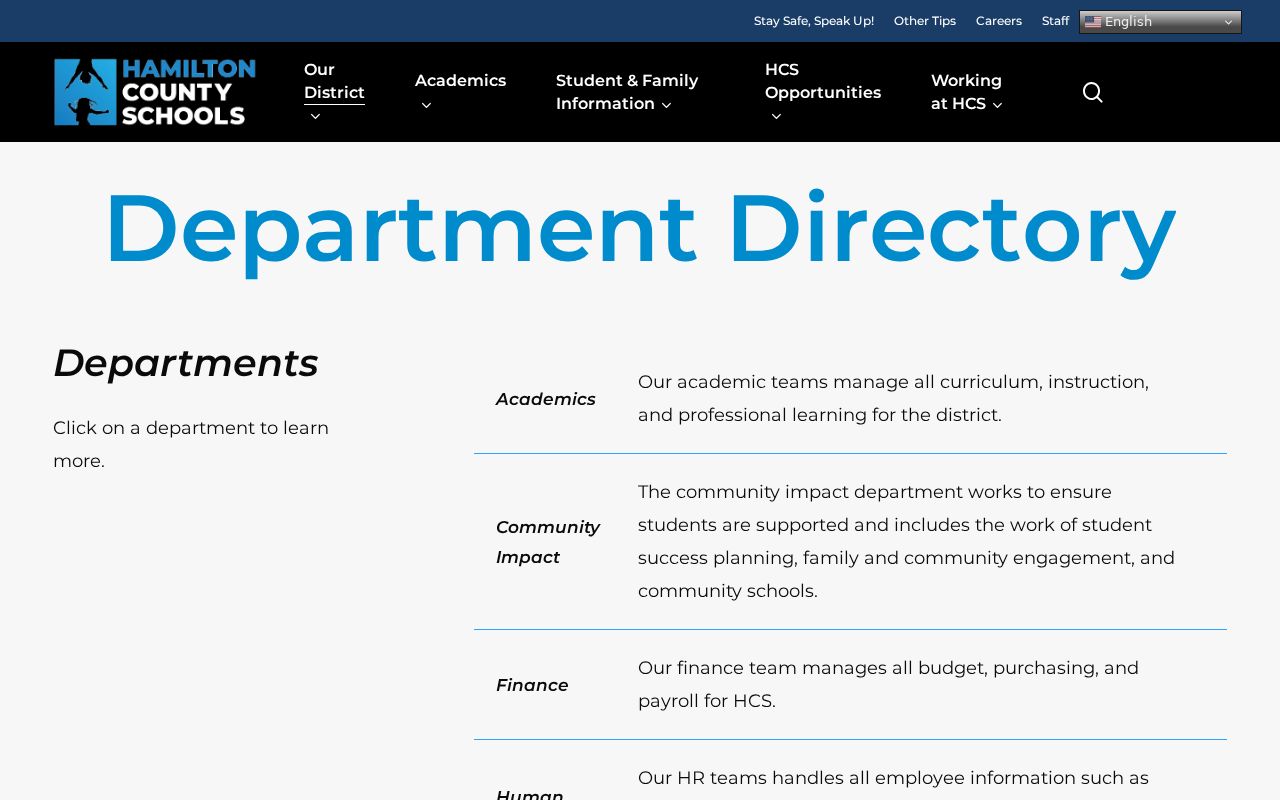
The screenshot shows the district's department route, which can lead to the right office even when a staff search is unavailable. The UTC department directory uses one optional Department field with the prompt “Search for a UTC Department.” Results can be browsed without a query. It is a unit directory rather than a faculty-name tool.
| UTC Directory Field | Control or Result | What It Provides |
|---|---|---|
| Department | Optional autocomplete text | Searches or narrows UTC units |
| Phone and fax | Result details | Official unit contact numbers |
| Mail code | Result details | Campus routing code |
| Street address and hours | Result details when supplied | Public office location and schedule |
The official UTC department search displays those fields in its current directory interface:
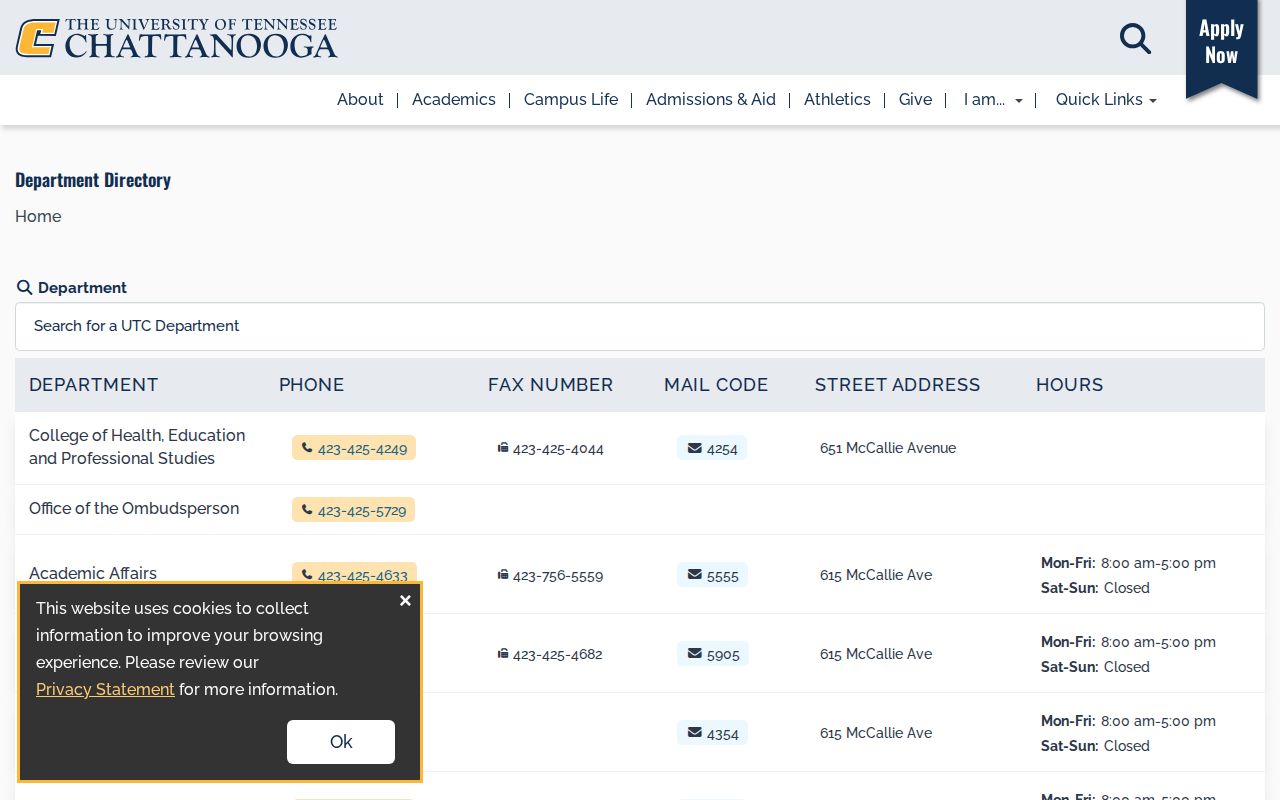
The image matches that department-based schema. UTC Library's separate staff page is the named roster, with full name, credentials, role, email, room, and telephone organized by library unit.
Chattanooga Property Owner Directories
The Tennessee Property Assessment Data search turns Hamilton County's tax roll into a current owner directory. Search by owner name, property address, parcel ID, subdivision, classification, or sale-date range. Hamilton's local syntax uses “last name, first name” and supports a beginning-string match. A deed with several owners may be indexed under only the first named person, so a missing co-owner is not proof that the ownership link does not exist.
A result row can show parcel ID, location, owner, year built, total value, square footage, description, sale date, sale price, and deed book/page. The assessment roll distinguishes the property address from the owner's mailing address. Neither field proves who lives at the site. A parcel is the tax map unit, while situs means the physical location of that land.
- Search the owner name and test a shorter prefix if the full spelling fails.
- Copy the parcel ID and book/page from the matching row.
- Use the county GIS link for map context and the Register index for deed parties.
- Check the county's downloadable assessment roll when many Chattanooga parcels must be compared.
The downloadable county roll changes about every 30 days and offers an open-data alternative to one parcel at a time. The Register's remote document system requires an application and monthly fee, while free public inspection remains available at its counter.
Chattanooga License and Business Directories
Professional people directories are statewide because Tennessee boards issue the credentials. The Commerce license verification service searches an individual or business name, a name within one license type, a license number, city, county, or license type alone. Public results can include status, expiration, and discipline. Health professions use a separate board system that searches name, city, state, ZIP, profession, and license number, with a CAPTCHA and daily source updates.
The Tennessee Business Information Search accepts a business name or Secretary of State control number. Its index can identify the legal entity, status, registered agent, addresses, and filing history as available. A registered-agent address is a legal contact point, not proof of a person's home. Copies and certificates are separate services and may cost money.
- Licensee
- The person or business to which a regulator issued a credential.
- Registered agent
- The person or service designated to receive legal papers for a business entity.
- Control number
- The identifier assigned to a Tennessee business filing.
- Primary source
- The board or agency that creates and maintains the official credential record.
Use a license directory to verify the public credential tied to a Chattanooga name, then confirm any open question with the issuing board. Voluntary group or chamber lists do not replace a regulator's record.
Chattanooga Obituary Directory Citations
The Chattanooga Public Library Local History and Genealogy Department maintains an obituary index covering 1897 through 2015. It returns publication details rather than always supplying the obituary image. Save the newspaper, date, and page citation, then check a library database or ask Local History for a scan or photocopy. Rates are provided on contact.
Local History Desk
1001 Broad Street, Chattanooga
423-643-7725
localhistory@lib.chattanooga.gov
Directory Collections
Obituary citations, 1897–2015
Chattanooga Times, 1869–1963 through library access
Microfilm, county records, maps, and genealogy databases
No appointment is needed. Staff point researchers toward sources but do not promise in-depth work. The desk also holds cemetery inscriptions, church histories, marriage material, wills, deeds, maps, and local newspaper microfilm. Together, those sources can distinguish people who share a name and connect a death notice to relatives or a former Chattanooga address.
Chattanooga Yearbook Directories by Numbers
UTC's digital Moccasin collection contains 63 full-text yearbook volumes from the 1911 through 1991 publication era. It is not one book for every calendar year. Still, the searchable run can locate students, faculty, clubs, teams, captions, and event photographs. The University Echo adds a 1906 through 1988 index, microfilm, and a digital full-text newspaper trail.
UTC explicitly does not retain alumni records as such. For a classmate or campus reunion search, yearbooks, newspapers, course catalogs, athletics programs, and alumni publications are the public directory path. Earlier institutional names matter: Chattanooga University, Grant University, and University of Chattanooga may appear before the modern UTC name.
The archive also preserves smaller rosters that behave like people directories. A 1941 through 1943 Ward 2 voter list, a 1928–1929 Chattanooga Women's Club yearbook, and organizational records can place a person in a ward or civic group. Search a collection description first, then search the digitized text or request the physical folder.
Note: A blank full-text search does not rule out a name because many UTC holdings are described only at collection or folder level.
Chattanooga Directory Discovery Changed
On March 1, 2025, CPL and UTC stopped supporting the inherited PastPerfect Online database for the Chattanooga History Collections. The current route uses UTC finding aids and digital collections. Old PastPerfect result links should not be treated as the live catalog. The jointly stewarded holdings include photographs, personal papers, administrative records, books, and objects from the former Chattanooga History Center.
Discovery now has two parts. Finding aids expose collection and folder descriptions, while Digital Collections provides full-text search and downloads for selected material. Some records remain visible only in the reading room or through an archivist. UTC Special Collections is open to the public in Library room 439 at 600 Douglas Street, and it offers walk-in research, appointments, Ask an Archivist, virtual consultation, and eligible digitization requests.
A 2025 grant project made the Woman's Christian Temperance Union of Chattanooga collection unusually searchable. It spans 1882–1995, with 53 archival records and more than 175 images, including transcribed charters, correspondence, financial records, and photographs. Such club and organization material can reveal names absent from a standard government directory.
Historical Chattanooga Directory Trails
Printed Chattanooga city directories reach into the nineteenth century. A documented 1890 directory exists, UTC displays a 1948 example and confirms earlier volumes on microfilm, and CPL's house-history guide points to an 1871–1960 run through Ancestry Library Edition plus a digitized 1904 Hill City Directory. The repositories do not publish one complete year-by-year inventory, so exact Polk, telephone, and reverse-directory holdings should be confirmed with Local History.
City volumes may reveal a resident or business name, street address, and volume-specific details such as spouse, widow notation, or occupation. Later street sections support reverse searching from an address, but fields vary by edition. Old phone books, church records, cemetery inscriptions, Sanborn maps, and newspaper notices add context. A directory entry shows that a publisher associated a name with that place at that time. It does not prove ownership.
| Period | Chattanooga Directory Milestone | Research Use |
|---|---|---|
| April 1867 | Postwar city census after the 58.6-foot flood | A local enumeration counted 3,229 white and 2,550 Black residents |
| 1871–1960 | City directories cited in CPL's house-history route | Trace a household forward or backward by year |
| 1904 | Digitized Hill City Directory | Direct online access to one historic volume |
| 1911–1991 | UTC Moccasin publishing era | Find campus names, groups, and photographs |
| 2017–present | CPL and UTC jointly steward History Center collections | Check which repository serves the item |
Boundary change can also hide a name. A household may stay put while annexation moves its address into Chattanooga, and a postal label may not match the city limits. Compare the same street across several directory years, then use a contemporary map, parcel roll, or deed citation. This layered approach respects gaps instead of treating absence as proof that someone left Hamilton County.
Use directory facts lawfully. Public names and addresses are for legitimate personal, historical, and civic research. Never use them to stalk, harass, threaten, or evade a protected address.