
How Chattanooga People Search Works
Start with the detail that is least likely to change. A full name can lead to a parcel, case, business filing, professional credential, or obituary citation. An old street address may be even more useful because it can link a household to an assessment roll, deed citation, city directory, permit file, and newspaper notice. Phone and email results from broad search tools can help, but an official record supplies the date, office, and context needed to test whether a match is the right person.
Chattanooga is the Hamilton County seat. Deeds, tax assessments, most local court files, marriage licenses, and jail data sit with county offices. Chattanooga government keeps municipal records such as City Court matters, permits, and city correspondence. Tennessee agencies add business filings, licenses, appellate cases, vital certificates, custody records, and unclaimed property. Each system answers a narrower question than a commercial profile, but the sources are easier to verify.
- Write down the name, spelling variants, a rough date range, and any known address or organization.
- Use Hamilton County property and court searches to place the name in a dated local record.
- Follow parcel book-and-page citations into deeds, or follow case numbers to the correct court clerk.
- Check library directories, newspapers, and obituaries when the trail predates current web portals.
- Ask the named custodian for an existing record when an index fails or a copy is needed.
Keep uncertain matches separate. A shared surname, street, or age is not proof of identity. Two or three records that agree on dates, addresses, relatives, or organizations provide a sounder link.
Chattanooga People Search Offices
No single office holds a complete Chattanooga record trail. The Register of Deeds records land instruments, mortgages, plats, powers of attorney, and other papers. The Circuit Court Clerk handles Circuit and General Sessions Civil files. Chattanooga routes city records through its Open Records Center. These three desks are useful starting points, while the County Clerk, Assessor, Clerk and Master, Election Commission, Health Department, and library fill narrower roles.
Hamilton County Register of Deeds
625 Georgia Avenue, Room 400
Chattanooga, TN
423-209-6560
Hamilton County Circuit Court Clerk
625 Georgia Avenue, Room 500
Chattanooga, TN
423-209-6700
Counter and clerk copy service
Chattanooga Open Records Center
City records request portal
Chattanooga, TN
311 routing assistance
The city portal lets Tennessee citizens submit, browse, and track requests for City or Police records. Deeds and most trial files remain county matters. The detailed custodian, fee, and request rules appear with the Chattanooga public records system.
The official Chattanooga Open Records Center shows the city’s separate request routes.
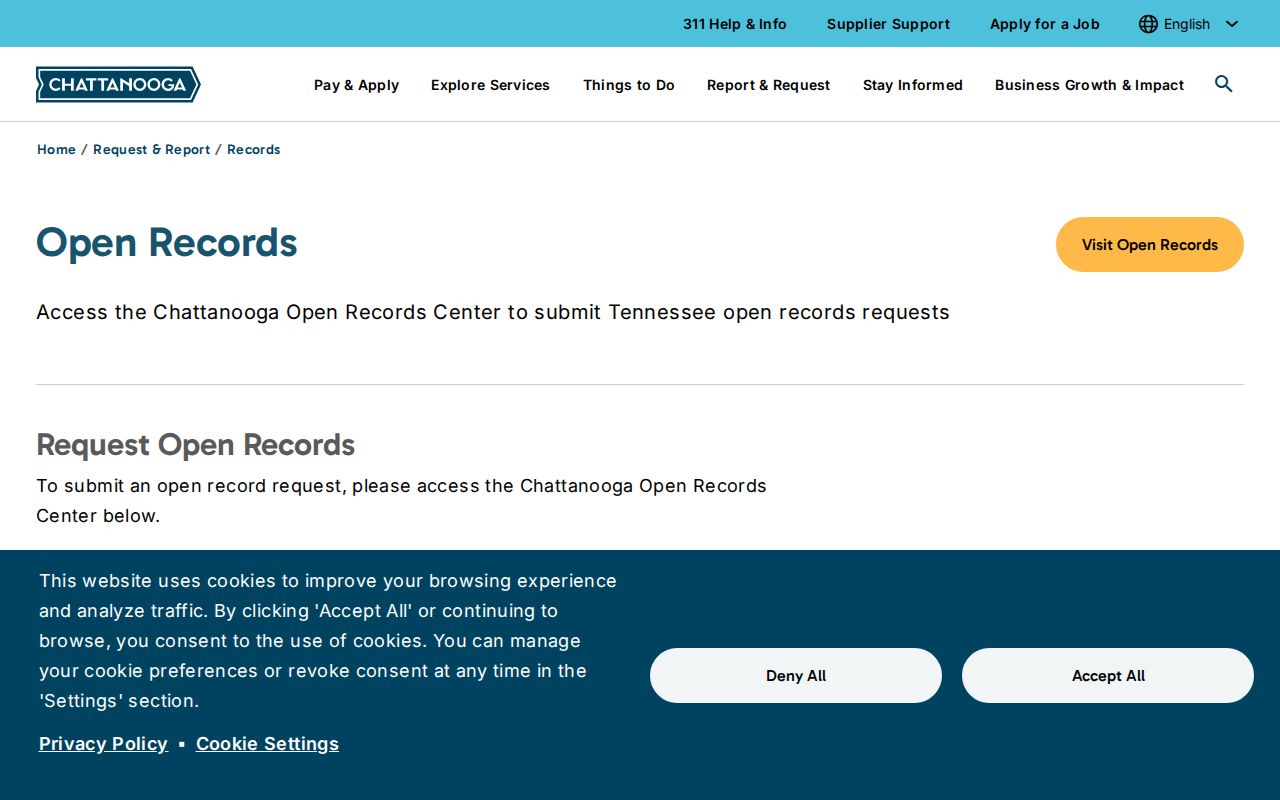
That division matters because a city request will not replace a county deed, assessment, or court search.
Chattanooga Property Name Search
Property records can turn a name into a dated Chattanooga address or turn an address into an owner name. The Tennessee Comptroller’s Property Assessment Data site searches Hamilton County by owner, property address, subdivision, classification, sale dates, and parcel components. Its basic screen accepts a county plus a name, address, or parcel ID. Advanced search is better when a common name produces too many results.
Use the owner format shown in the Assessor guidance: last name, first name. Prefix matching helps with initials and uncertain spellings. One quirk can hide a valid match. Hamilton County indexes a multi-owner deed under the first person named, so a co-owner may not appear in a name search. Browse the address and inspect the returned ownership line before concluding that no property link exists.
| Property field | Best use | Caution |
|---|---|---|
| Owner name | Find parcels tied to a person | Co-owner indexing can miss a name |
| Property address | Find the assessed parcel | Situs is the land, not proof of residence |
| Parcel ID | Move between tax, GIS, and deeds | Copy spaces and decimals exactly |
| Book and page | Open the recorded deed trail | The Register controls the image |
The Tennessee property assessment search displays the owner, address, and parcel search entry points.
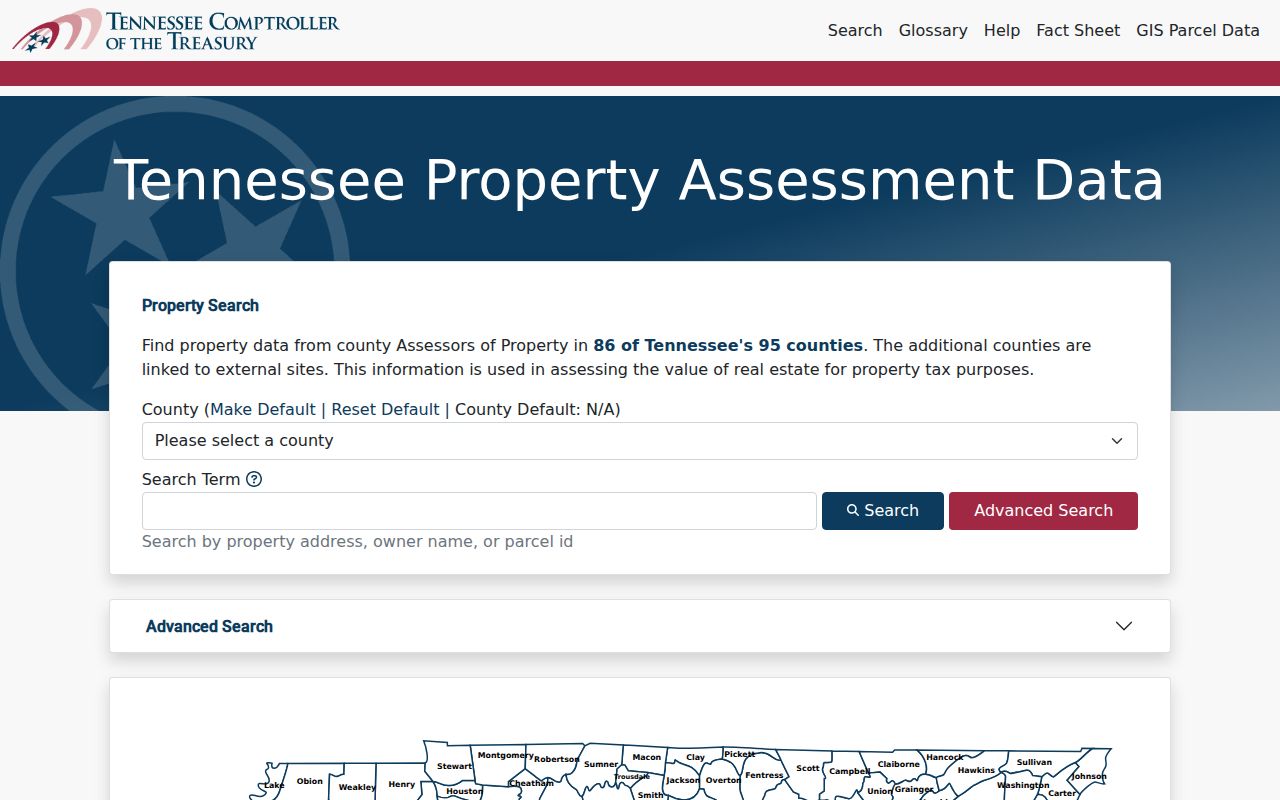
Copy the parcel and deed citation from a likely match, then verify title with the recorded instrument rather than the assessment alone.
Note: A mailing address may differ from the parcel’s situs address, and neither field alone proves where an owner currently lives.
Chattanooga Deed Search Access
The Hamilton County Register’s online system has an unusual public and paid split. Anyone may inspect public records at the office, but sustained remote database access requires an application, password, and a $50 monthly charge. Party searches default to July 1, 1969 through the present. Published modes include Party, Book & Page, Document, Property, Party/Property, Index, and Quick.
If the Assessor already supplied a book and page, use that citation first. In Party mode, select a date range and narrow by document group or type when useful. “GI” means General Index. For plats, the official instructions recommend P% when the exact plat index is not known. Results link the citation to an image, with PDF the more durable format described in the older instructions.
| Register control | Required | Use |
|---|---|---|
| Search type | Yes | Choose party, citation, property, index, or quick mode |
| Date range | Party mode | Defaults to July 1, 1969 through present |
| Book and page | By mode | Open a known recorded citation |
| Document group | No | Narrow a party search |
| PDF or TIFF | No | Select the linked image format |
The Register search landing page explains account access and office services.
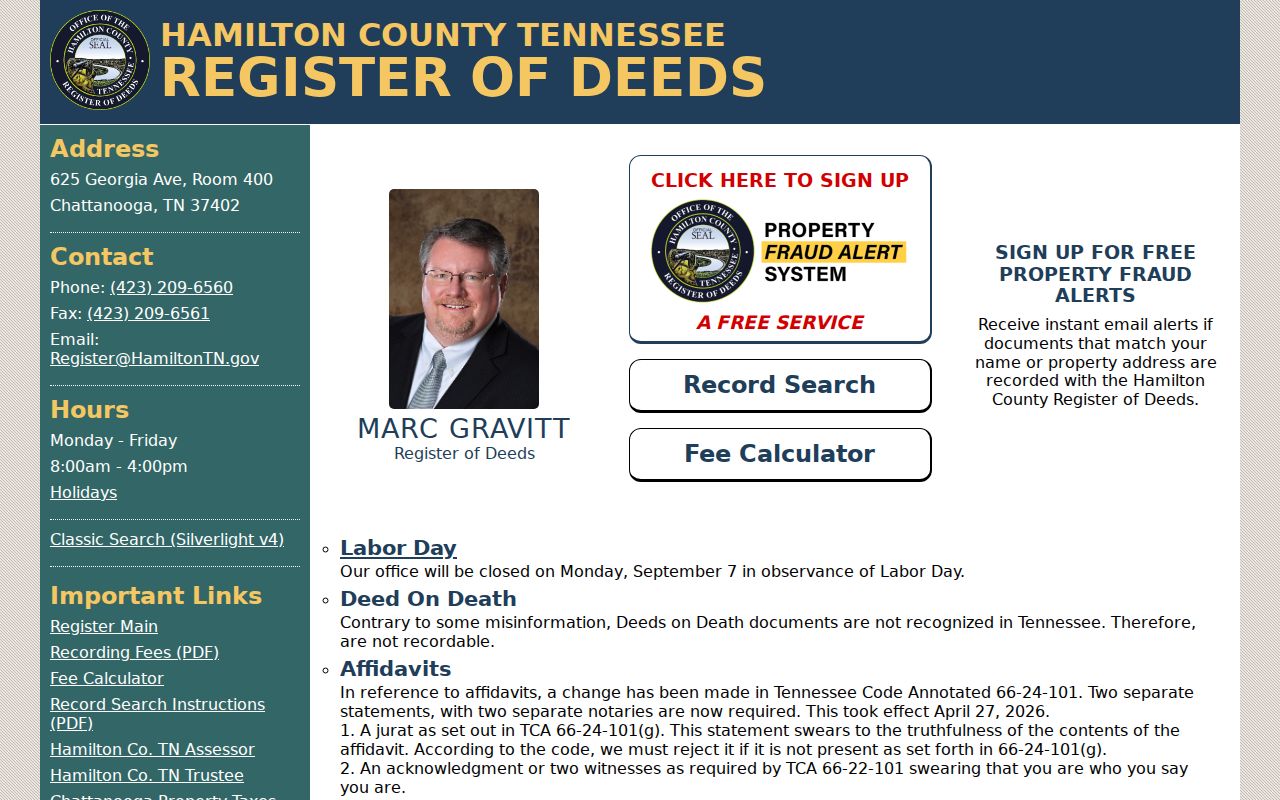
The counter remains the no-subscription path, and a narrow request is useful when an older index or microfilm record is not exposed online.
- Grantor
- The person or entity transferring an interest.
- Grantee
- The person or entity receiving an interest.
- Book and page
- The recorded citation used to locate an instrument.
- Plat
- A recorded map that shows parcels or subdivisions.
Chattanooga Court Name Search
A Chattanooga name may appear in separate court systems. Circuit and General Sessions Civil cases use Tennessee Case Finder. General Sessions Criminal and Criminal Court use the local CJUS party search. Chancery publishes current dockets while the Clerk and Master keeps the full equity, estate, trust, guardianship, lien, and delinquent-tax files. Chattanooga City Court separately covers municipal, traffic, animal, and environmental matters.
| Court layer | Name-search route | What to verify | Fallback |
|---|---|---|---|
| Circuit and Sessions Civil | Tennessee Case Finder | Party, file date, case number | Circuit Court Clerk |
| Sessions Criminal and Criminal | CJUS | First, middle, and last name | Criminal clerk at 600 Market Street |
| Chancery | Current docket files | Case and procedural setting | Clerk and Master |
| City Court | Municipal records search | City case or citation | City Court Clerk |
| State appellate | Appellate case search | Appeal, parties, milestones | Trial clerk for the original file |
| Federal | PACER | Eastern District case | Federal clerk |
The Hamilton criminal case search exposes a public name form with last, first, and middle-name fields.
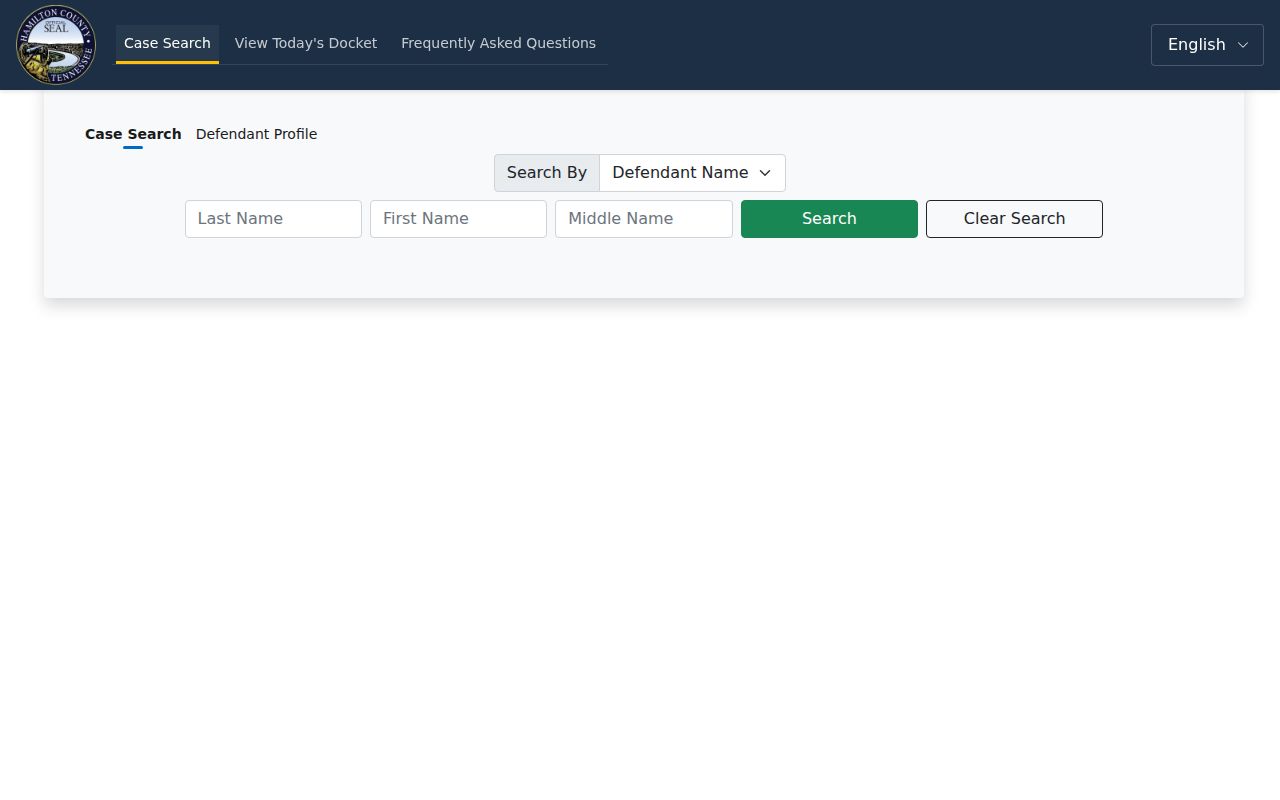
The separate Social Security number control belongs to a defendant profile login, not the general public name lookup.
The Tennessee appellate case search reaches cases that moved beyond a Hamilton County trial court.
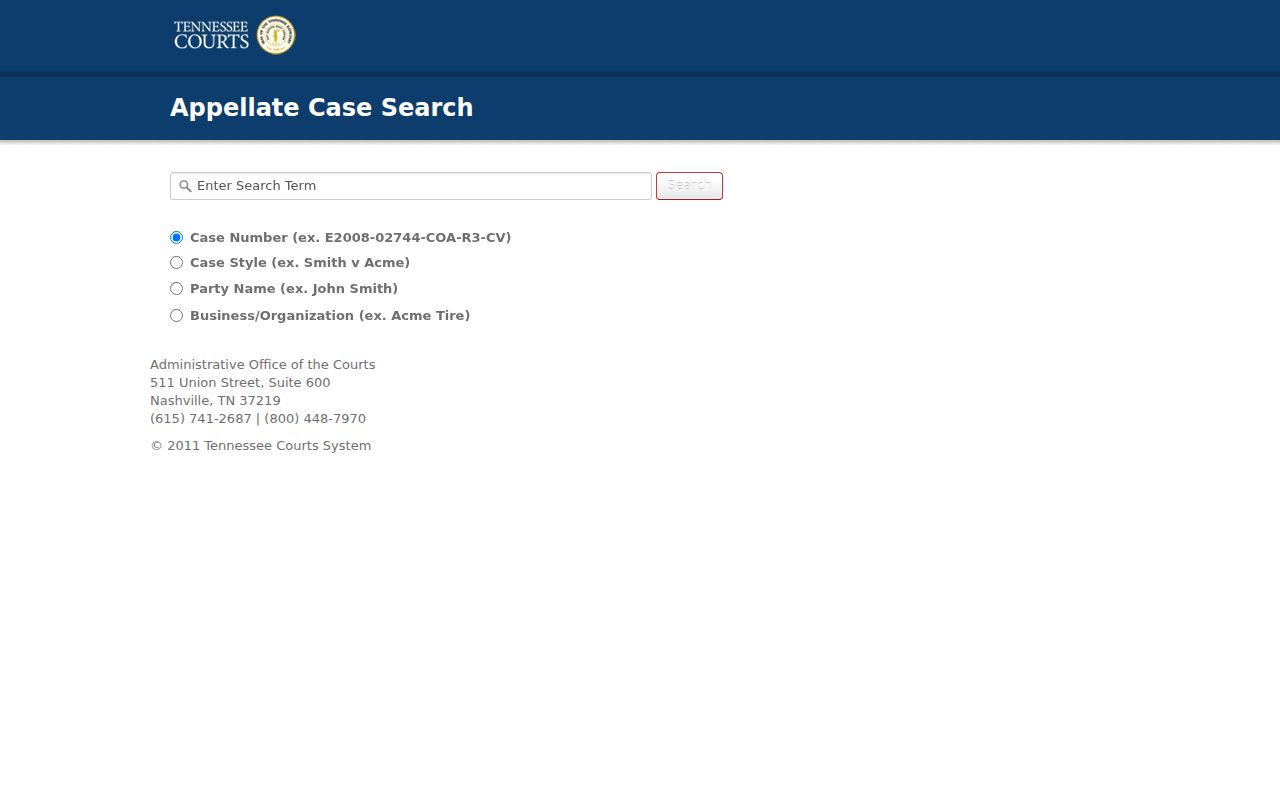
An appellate result can show the case style, parties, counsel, milestones, disposition, and document history, but it does not replace the trial file.
Use court records only for lawful personal research. Never infer a hidden case from a no-result or use a record to stalk or harass anyone.
Chattanooga Vital Records Search
Current Tennessee vital certificates are controlled records, not an open name database. The Hamilton County Health Department can issue registered Tennessee birth and death certificates to eligible applicants. The state Office of Vital Records handles birth, death, marriage, divorce, and annulment certificates. The Hamilton County Clerk is the local marriage-license source, while the court clerk holding a divorce case controls the judicial file.
Birth records become public after 100 years. Death, marriage, divorce, and annulment records become public after 50 years under Tenn. Code Ann. § 68-3-205(e). Older material moves into Tennessee State Library and Archives channels. Current state applications carry a $15 nonrefundable search fee that includes one certified copy if found. Eligibility, identification, and proof of authority still apply.
A historical researcher can combine the Hamilton marriage index, TSLA collections, county marriage books, court files, church registers, cemetery sources, and newspapers. A certificate, license record, and court case are different documents. Ask for the one that answers the question.
Chattanooga Obituary Records Search
The Chattanooga Public Library Local History and Genealogy Department is the strongest offline bridge when web records stop. It holds city directories plus wills, deeds, marriages, cemetery inscriptions, court records, church histories, maps, newspapers, and county material in print or microfilm. Its staff-built obituary index covers 1897 through 2015 and returns a publication citation. The citation can lead to a scan or photocopy request when the issue is not available in a library database.
At the Chattanooga library genealogy desk, readers can also use Ancestry Library Edition onsite and reach Newspapers.com Southeast Edition with a library card.
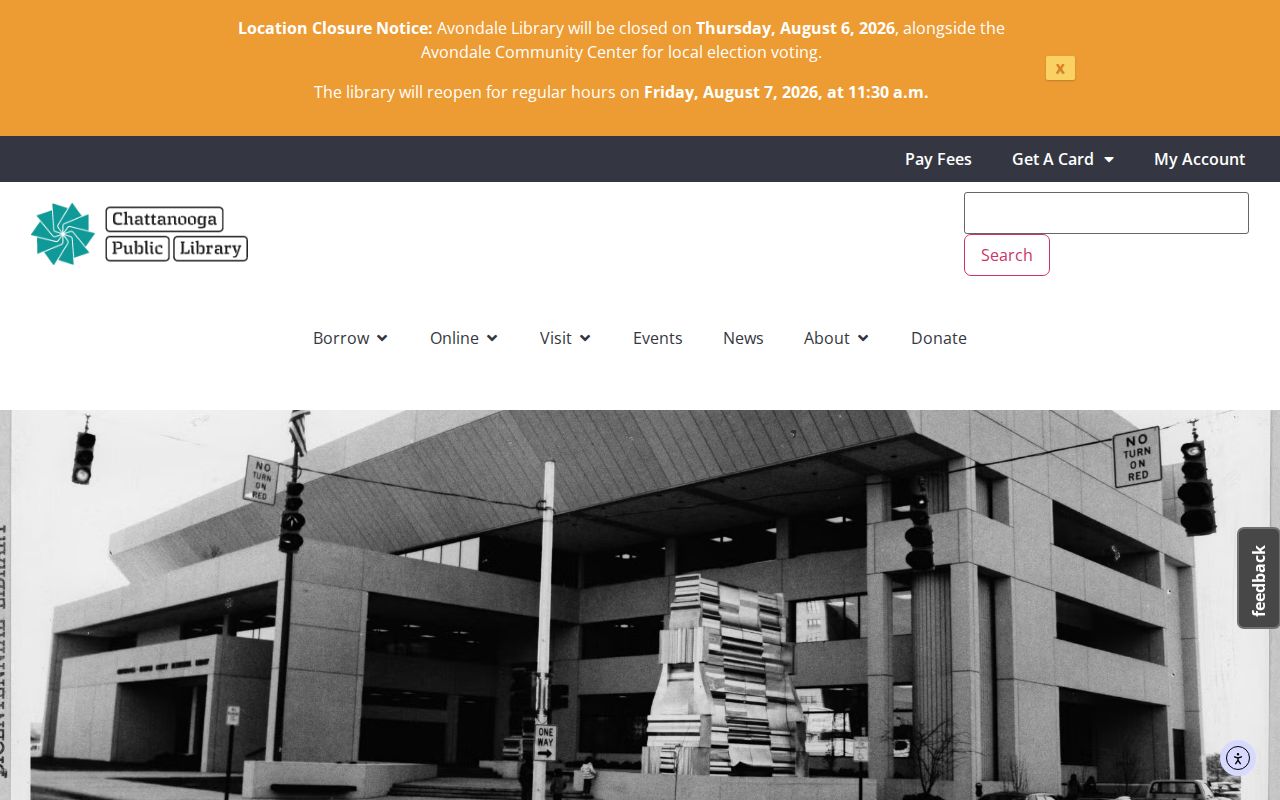
An obituary citation often supplies relatives, alternate names, a neighborhood, and a date that can separate people who share the same name.
The House History Guide points to Chattanooga city directories from 1871 through 1960 in Ancestry Library Edition and a digitized 1904 Hill City Directory. Pair an occupant with a deed or assessment before treating that person as the owner. Library staff offer guidance, but they do not promise full research on behalf of a requester.
Note: The obituary index is a citation tool, so request the underlying newspaper item before relying on names or family relationships.
Chattanooga Jail Records Search
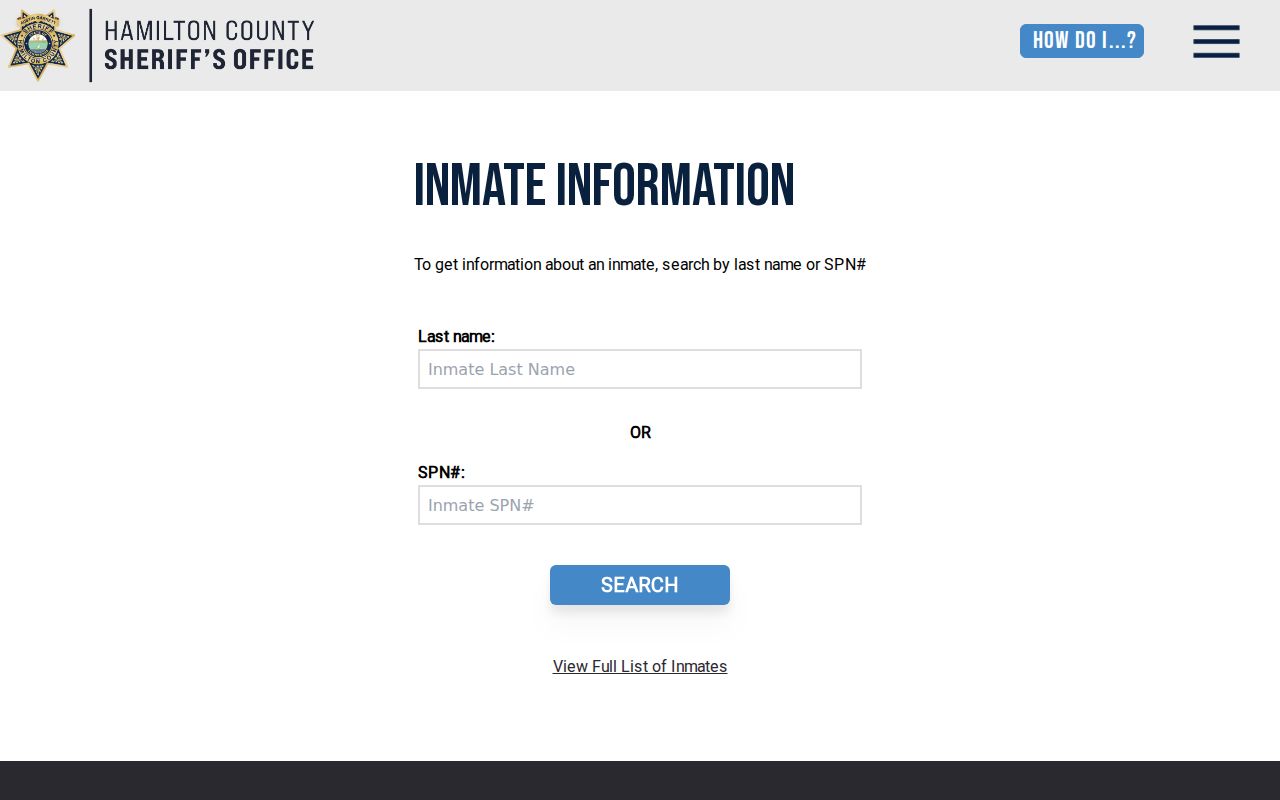
Custody records answer a narrow, time-sensitive question. The Hamilton County Sheriff’s inmate tool accepts a last name or SPN number and also provides a full-list browse control. Booking reports are organized by date. Neither a jail listing nor a booking report proves guilt, and neither serves as a lifetime criminal-history source. The court docket and clerk file supply charge and disposition context.
The Hamilton County inmate search shows the local lookup and browse controls.
For state felony custody, use Tennessee’s FOIL service. Federal custody since 1982 is covered by the federal locator. Always return to the originating court or agency to confirm the record and current status.
Chattanooga Business Records Search
A business name can connect a person to a registered-agent address, public filing, license, or permit. The Tennessee Secretary of State searches entities by business name or control number. Results can supply the legal name, status, agent, registered office, and filing history. An agent address is a legal contact point, not proof of a home address.
Tennessee’s health licensure portal searches by personal name, place, profession, and license number, with a CAPTCHA and daily source updates. Commerce verification offers searches by individual or business name, license type, number, city, or county. These systems may show status, expiration, and public discipline. Written verification comes from the board that issued the credential.
City permit records may add the applicant, contractor, inspection, occupancy, or code trail tied to an address. Chattanooga’s Land Development Office divides phone and email channels by zoning, building, subdivision, code, and trade permits. If the online portal does not show an older file, request the existing permit by address, type, approximate dates, and case number.
Chattanooga Search Privacy Limits
Open access does not erase confidentiality. Recent vital certificates, adoption files, juvenile matters, sealed or expunged cases, motor-vehicle personal data, protected identifiers, and Safe at Home addresses remain restricted by state or federal law. Tennessee’s Safe at Home program gives eligible survivors a substitute public address and protects the actual residence. It does not erase records that existed before enrollment.
The Tennessee Information Protection Act took effect July 1, 2025 for covered businesses. Depending on the controller and data, a Tennessee consumer may seek access, correction, deletion, portability, or an opt-out from sale, targeted advertising, and certain profiling. Those rights do not remove a deed, court filing, or other official government record. For a commercial search provider, use its own privacy request, provide only necessary proof, save the confirmation, and recheck later.
| Source | Strength | Main limit |
|---|---|---|
| Official custodian | Dated, defined government record | May require a request, fee, or eligibility |
| Library or archive | Historical context and original collections | Some material is onsite or on microfilm |
| Commercial search category | Fast cross-source lead | Can be stale, mismatched, or incomplete |
Chattanooga Voter Directory Leads
Tennessee’s voter lookup is a personal registration check, not a surname directory. It requires Hamilton County, first name, last name, birth month, and birth year. A successful lookup can confirm registration and election geography, while the Hamilton County Election Commission resolves a no-match, move, name change, recent application, or precinct question.
The statewide compiled voter list has separate controls. A requester must certify a political purpose under Tenn. Code Ann. § 2-2-138, and confidential identifiers and protected addresses remain excluded. The full end-to-end rules belong with Chattanooga voter registration records. Government, school, university, property, professional, and historical name sources are organized on the people directories page.
Chattanooga Flood Census Records
One of Chattanooga’s most unusual people sources grew from disaster. A flood reached 58.6 feet in 1867, destroyed the only Tennessee River bridge, and damaged most buildings. That April, the city conducted its first postwar census. It counted 3,229 white residents and 2,550 Black residents. Unlike a federal census, this was a local enumeration created during a pivotal year.
Older county series can predate the Chattanooga name because Hamilton County was established in 1819 and the city was incorporated in 1839. Boundaries also changed. A person missing from a city directory may have lived at the same physical place outside the city limits used by that year’s publisher. Contemporary maps, county rolls, and nearby jurisdiction records can keep the trail moving.
Be wary of the repeated claim that a Hamilton County courthouse burned in 1910. The research record points instead to James County courthouse fires in 1890 and 1913, whose losses are often blended into Hamilton County accounts. Confirm the exact series with TSLA before treating a local record as destroyed.
Chattanooga Records Request Fallback
A failed portal search is not a dead end. Tennessee citizens may inspect open state, county, and municipal records under the Tennessee Public Records Act, Tenn. Code Ann. §§ 10-7-501 through 10-7-518. The Act covers existing records. It does not require an office to answer questions, conduct research, or create a new list. A custodian may ask for acceptable proof of Tennessee citizenship.
- Identify the city, county, court, or state office that created or keeps the record.
- Name the record type, date range, subject, and useful keywords.
- Choose inspection or copies and state the preferred delivery method.
- Ask for a cost estimate before approving copy, delivery, redaction, or labor charges.
- If access is denied, ask for the legal basis and seek Open Records Counsel help when needed.
If a record cannot be made available promptly, the custodian has seven business days to produce it, deny access in writing with the legal basis, or state how much more time is reasonably needed. That is a response point, not a universal production deadline. Narrowing an overbroad request or asking for segregable, redacted portions may resolve a dispute faster.
Chattanooga Archives Search Today
Local historical discovery changed on March 1, 2025. Chattanooga Public Library and UTC stopped supporting the inherited PastPerfect Online database for the Chattanooga History Collections. Current research now moves through UTC Finding Aids, digital collections, and the two repositories that jointly steward the material. An old PastPerfect result should not be treated as the current catalog.
UTC Special Collections offers walk-in research, appointments, Ask an Archivist, virtual consultation, and digitization requests. Its 63 full-text Moccasin yearbook volumes span the 1911 through 1991 publishing era, while the Echo route includes a 1906 through 1988 index. A 1941 through 1943 Chattanooga Ward 2 voter registration list survives as its own finding-aid collection. These sources can reconnect classmates, trace a family, or place a person in a past neighborhood.
The archive may describe a collection or folder without naming each person inside it. Search the finding aid, then ask which box, digital item, or partner repository holds the material. In 2025 UTC also completed a searchable WCTU collection covering 1882 through 1995, with organizational records and images that work like an uncommon name directory.